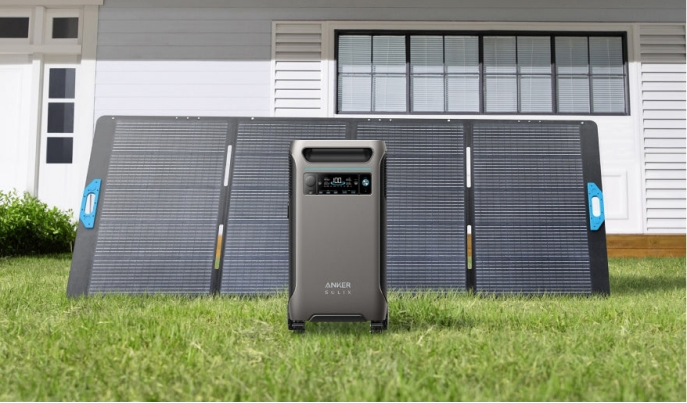
The number of solar panels a home needs depends on how much electricity the household consumes, how much sunlight the location receives, and how efficiently the panels convert sunlight into usable power. These factors shape system size more than any single specification. Roof space, shading, and panel orientation further influence how many panels can be installed effectively. A portable panel such as the Anker SOLIX PS400 Portable Solar Panel helps homeowners visualize how angle, placement, and efficiency affect output. When planning a panels solar home setup, understanding these variables ensures expectations match real-world production capacity and helps homeowners build a system that truly supports their daily energy needs.
The Core Factors That Shape System Size
Household Energy Consumption Drives Total Required Output
The biggest determinant of solar system size is how much electricity a home uses each month. High-consumption households—those with central air conditioning, electric heating, multiple refrigerators, or EV chargers—require far more solar capacity than smaller homes with efficient appliances. Solar installers calculate daily and annual usage and then size the system to offset as much of that consumption as possible. This is also where portable panels provide perspective. Watching how the Anker SOLIX PS400 charges a compatible power station helps homeowners understand the relationship between wattage and usable energy. Even though the PS400 is compact, its 400W output demonstrates how production scales with demand, giving a practical sense of how many kilowatt-hours larger systems must generate.
Sunlight Availability Determines Production Potential
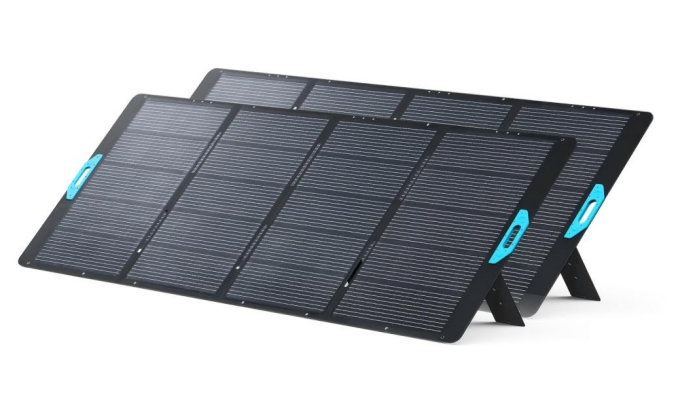
Solar panels only perform as well as the environment allows. Homes in high-sun regions such as Arizona or Southern California need fewer panels to produce the same amount of power compared with homes in cloudier climates. Seasonal variation also matters. Winter sunlight is weaker and shorter in duration, reducing daily output. Adjustable-angle designs like those on the PS400 highlight how optimal orientation can increase production even in less-than-perfect conditions. Users can try different tilt positions—30°, 40°, 50°, or 80°—and observe differences in charging performance. This hands-on experience illustrates how geographic sunlight levels directly determine how many panels a permanent system must include to meet the household’s target offset.
Panel Efficiency Impacts the Total Panel Count
Not all solar panels generate the same wattage per square foot. High-efficiency monocrystalline panels produce more energy on limited roof space, allowing homeowners to install fewer units while achieving the same output. Lower-efficiency panels require more surface area and a larger array. The PS400 panel’s 23% conversion efficiency demonstrates how modern technology can extract more energy from available sunlight. When roof space is limited, choosing a higher-performing panel significantly reduces the total number required. Efficiency becomes a decisive factor in dense urban neighborhoods or homes with small or irregularly shaped roofs.
Practical Constraints That Influence Panel Quantity
Roof Size and Usable Surface Area Set Physical Limits
Even if a home uses a large amount of energy, the roof may not support enough solar panels to cover it fully. Vents, chimneys, skylights, and shaded zones reduce the available surface area. Roof orientation also shapes where panels can be placed effectively. South-facing surfaces often perform best in many regions, while east- and west-facing surfaces generate moderate production. When roof space is small, households must either accept partial offset or incorporate supplemental solutions. Portable units such as the Anker SOLIX PS400 help visualize how much surface area a single panel requires when fully unfolded. Its compact footprint reminds homeowners that fixed rooftop panels need even more careful spacing and uninterrupted exposure.
Electrical System Capacity Determines System Size Potential
A home’s electrical infrastructure must support the incoming solar power. Older breaker panels, undersized service lines, or outdated wiring may require upgrades before a medium- or large-sized solar system can be installed safely. This infrastructure limitation affects how many panels the system can support. While portable panels bypass these constraints by operating independently, watching the PS400 deliver stable power output into a compatible device reinforces the importance of safe electrical integration. Homeowners planning larger rooftop systems must ensure that their current electrical setup can handle the intended capacity, which in turn affects how many panels can be used.
Long-Term Energy Goals Influence Panel Count Decisions
Some homeowners design systems to cover only their average monthly usage, while others want enough capacity to support future needs—such as the addition of electric heating, an EV, or expanded living space. Anticipating future consumption often leads to installing more panels upfront or ensuring the system is expandable. Portable panels like the PS400 offer supplemental flexibility. They can support backup power stations and off-grid activities, giving homeowners a practical sense of how solar generation fits into their evolving energy plans. This broader perspective influences how they choose system size and whether they prioritize expandability in rooftop installations.
Conclusion
Determining how many solar panels a home needs requires understanding energy usage, local sunlight conditions, panel efficiency, and the physical characteristics of the home itself. Roof size, shading patterns, and electrical infrastructure further shape what is feasible and practical. Tools like the Anker SOLIX PS400 Portable Solar Panel help homeowners visualize how orientation, tilt, and efficiency influence power generation, making the sizing process easier to understand. By evaluating both current needs and long-term goals, families can design a solar system that delivers meaningful energy savings, reliable performance, and a setup that aligns with their home’s physical and environmental realities.